
situs slot gacorhttps://dessert.khadizachowdhury.com/https://ciaglobal.org/https://www.nqiegypt.org/
Mountain Alliance for Pastoralists & Minority People
Facilitated by:

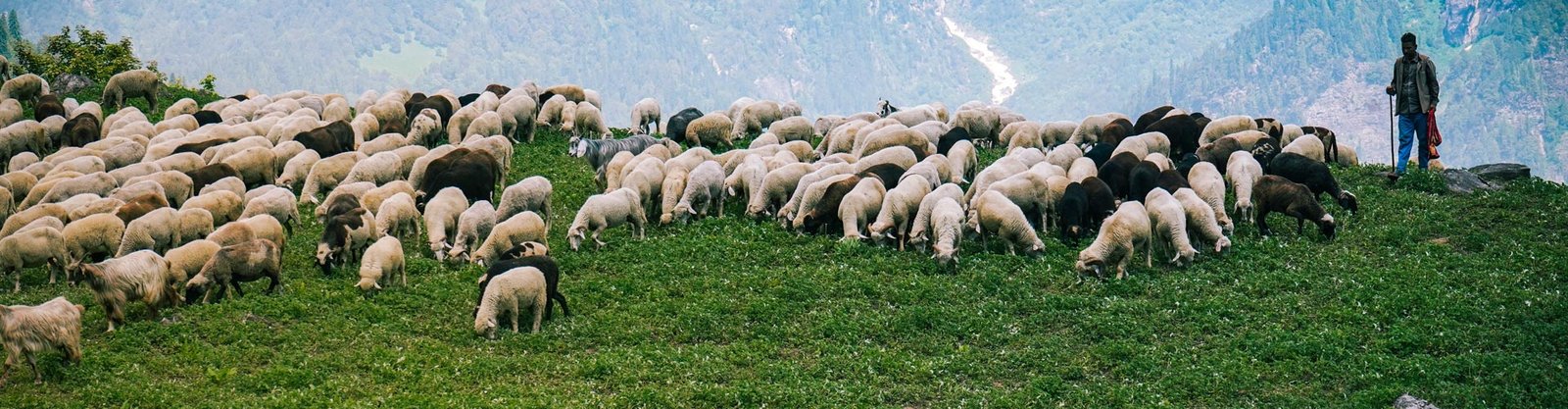
21 May 2026 | Regional Webinar – Western Balkans
https://tgi-wb.eu/rgweb/
A total of 132 participants registered for the webinar on Zoom.
The Western Balkans took an important step toward re-centering pastoralism in regional policy and public discourse with the launch of the IYRP–WBRG Webinar on “Pastoralists and Pastoralism at a Crossroads”. Convened under the framework of the International Year of Rangelands and Pastoralists 2026, the event marked not only a moment of reflection, but the formal beginning of a longer political and social process — the Western Balkans Regional Gathering of Pastoralists (WBRG) https://minoritymap.org/rg/.
Opening the session, Prof. Dr. Luigj Turmalai welcomed participants from across the region and beyond, setting the tone for what would become a dense and, at times, sobering conversation. He framed pastoralism not as a marginal or residual livelihood, but as a living system embedded in the mountains, cultures, and ecological histories of the Balkans. At the same time, he made clear that pastoral communities now stand “at a crossroads,” facing pressures that are structural, accelerating, and interconnected — ranging from land insecurity and shrinking grazing areas to climate change, demographic decline, and the erosion of knowledge systems. What distinguished the discussion from many earlier forums was the insistence that pastoralism is not simply about landscapes, but about people — people whose presence, movement, and knowledge have historically shaped those landscapes.
A central thread throughout the webinar was the critique of how pastoralism is currently framed in Europe and beyond. Prof. Letizia Bindi, drawing on ethnographic work from the Italian Apennines and comparative regions, challenged the growing tendency to celebrate pastoralism as “heritage” while allowing the conditions of pastoral life to deteriorate. She argued that transhumance should not be reduced to folklore or symbolic identity. Rather, it is “ecological intelligence and territorial governance”, a system through which landscapes, animals, and communities co-evolve through seasonal mobility. Yet this intelligence is increasingly sidelined as pastoral territories are reconfigured for tourism, conservation branding, and extractive uses of “authenticity”.
This paradox — where biodiversity value rises while pastoral livelihoods decline — was repeatedly emphasized. In many regions, pastoral landscapes are maintained precisely because of long-standing grazing practices, but the communities responsible for them are excluded from decision-making or pushed into precarious economic positions.
One of the most forceful interventions came through the presentation on conservation and grazing rights, which challenged the dominant “pristine nature” paradigm in protected area management. Dr. Hasrat Arjjumend’s argument was clear: the idea that ecosystems are healthiest when devoid of human presence is not only historically inaccurate, but ecologically misleading. Evidence presented showed that many of Europe’s iconic landscapes — including alpine meadows — are products of centuries of grazing. Where grazing has been removed, biodiversity has often declined rather than recovered. At the same time, conservation policies have, in many cases, imposed restrictions on pastoral mobility, curtailed access to grazing lands, and contributed to the gradual dismantling of transhumance systems in the Balkans and across Europe.
The discussion went further, pointing to a broader global pattern: protected areas are frequently sites of competing land uses, where pastoralists face restrictions while industrial and infrastructure projects — hydropower, tourism complexes, roads — continue to expand. In the Balkans alone, over 1,600 hydropower projects have been proposed, with nearly half located inside protected areas. The critique was not of conservation per se, but of a model that separates people from landscapes, often at the cost of both ecological integrity and social justice.
Complementing this, Ms. Nukila Evanty addressed the issue of infringing land rights and restricted livestock mobility, emphasizing that pastoralism fundamentally depends on access—access to land, corridors, and seasonal grazing routes. She highlighted how legal ambiguities, privatization, conservation restrictions, and administrative barriers increasingly constrain mobility, which is the backbone of transhumant systems. She highlighted “land grabbing” vis-à-vis the rights of grazing communities. When movement is restricted, she noted, the entire ecological logic of pastoralism begins to collapse, leading to overgrazing in limited areas, abandonment of others, and ultimately the erosion of both livelihoods and ecosystems. Her intervention reinforced the need for rights-based approaches that recognize mobility not as a problem, but as a solution embedded in pastoral systems.
While much of the conversation focused on rights and recognition, the economic dimension of pastoralism was also addressed with urgency. Dr. Ilse Koehler-Rollefson highlighted the need to rebuild pastoral economies through stronger value chains that reflect the distinct qualities of pastoral production systems.
Pastoralism, she noted, offers clear advantages — high animal welfare, nutritionally rich products derived from biodiverse diets, and strong links to local heritage. Yet these advantages are rarely translated into fair market returns for pastoralists. Instead, value is often captured elsewhere—by tourism industries, branding initiatives, or intermediaries. Her call was pragmatic: invest less in abstract research and more in enabling mobility, marketing pastoral products, and strengthening local economies. Without viable livelihoods, the ecological and cultural benefits of pastoralism cannot be sustained.
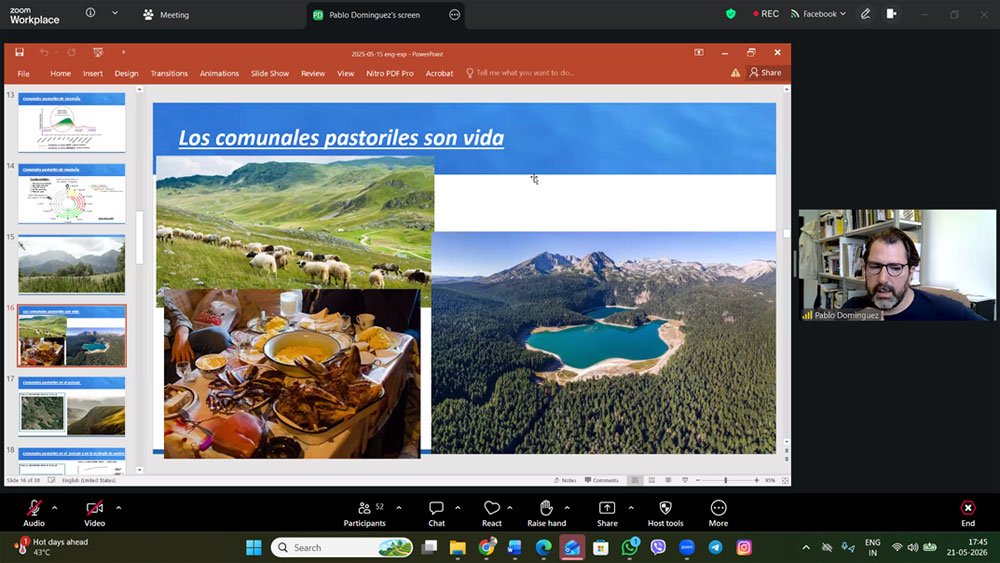
Dr. Pablo Domínguez, speaking on the economic marginalization of shepherds and hostile markets, pointed to the structural imbalance in agri-food systems where pastoral producers remain at the weakest end of the value chain. Despite producing high-quality, environmentally sustainable products, shepherds often face volatile prices, limited bargaining power, and market systems that favour industrial livestock production. He argued that without correcting these distortions — through fair pricing mechanisms, local processing, and stronger producer organizations — pastoralism will continue to decline, not because it is unviable, but because it is systematically undervalued.
Internal Colonization” and Knowledge Erosion
A more conceptual, but equally important, contribution came from Dr. Zsolt Molnár, who introduced the notion of “internal colonization” to describe how traditional knowledge holders are marginalized within their own regions. He described a pattern in which pastoral communities are subject to external regulations, bureaucratic systems, and extractive research practices that treat them as data sources rather than partners. This leads to misrepresentation, loss of agency, and ultimately, erosion of both knowledge and biodiversity.
The term resonated with many participants, particularly in the Balkan context, where rural and mountainous regions often experience policy decisions imposed from urban centers. The implication was clear: sustaining pastoralism requires not only economic and environmental measures, but a rebalancing of power and recognition.
Focusing on environmental change, Dr. Petrit drew attention to the accelerating impacts of climate variability on pastoral systems. He described how rising temperatures, prolonged droughts, and erratic rainfall patterns are degrading pasture quality and reducing the reliability of water sources. These shifts disrupt long-established grazing cycles and transhumance routes, increasing both uncertainty and operational costs for pastoralists. While herders have historically adapted to environmental fluctuations, the current pace and unpredictability of climate change are stretching these adaptive capacities, making targeted policy support and ecosystem-based adaptation strategies increasingly urgent.
Adding a socio-demographic dimension, Dr. Ayushi Malhotra highlighted the growing challenge of youth migration from pastoral regions. As younger generations move toward urban areas in search of education and employment, pastoral communities are left with an ageing workforce and a shrinking labour base for livestock herding. This trend not only threatens the continuity of pastoral practices but also accelerates the loss of intergenerational knowledge transfer. She underscored that without making pastoralism economically viable and socially valued, it will be difficult to retain youth engagement, putting the future of transhumance systems at risk.
In the session “Voices from the Field: Shepherd Perspectives,” Mrs. Rigerta Loku brought a grounded and personal account of the challenges pastoralists face due to restricted access to grazing lands. Speaking from direct experience, she described how traditional grazing areas — once freely accessible through customary practices — are increasingly limited by administrative barriers, privatization, and conservation rules that often overlook pastoral realities. These restrictions not only reduce available pasture but also disrupt established seasonal movements, forcing herders into smaller areas and raising the risk of overuse and conflict. Her intervention underscored that for shepherds, access to land is not merely a resource issue, but the foundation of their livelihood, identity, and continuity of pastoral traditions.
Addressing “Transhumance and mobility challenges”, Mr. Ferit Blloshmi from Elbasan Zone (Albania) explained the difficulties faced by shepherds while moving into the highland pastures. He was speaking from the mountain pastures directly.
As a member of panel discussion, Prof. Dr. Edmond Panariti narrated “Promoting Climate Adaptation & Water Resources”. In his intervention, Prof. Dr. Edmond Panariti, former Minister of Foreign Affairs and Minister of Agriculture of Albania, offered a deeply reflective and cautionary perspective on the future of Albania’s mountain pastures, portraying them not merely as grazing lands but as living heritage, ecological assets, and pillars of rural economy. He traced the origins of pastoral systems back to Illyrian times, emphasizing how centuries-old traditions of transhumance and communal land management have sustained both biodiversity and cultural identity, embedding pastoralism into the very fabric of Albanian society. Highlighting the ecological richness of these landscapes — with thousands of plant species and vital functions in soil fertility, water regulation, and climate buffering — he underscored their continued importance for livelihoods through livestock production, dairy, and emerging sectors such as eco-tourism and organic products. However, his central concern focused on the Albanian government’s proposed “Mountain Package”, which he warned could fundamentally alter this balance by centralizing control and enabling privatization, thereby risking displacement of shepherd communities, overexploitation of fragile ecosystems, and erosion of traditional rights. Framing the issue as a broader political and ethical dilemma, he argued that such policies may prioritize short-term economic gains over long-term sustainability and deepen inequalities between rural communities and urban elites. At the same time, he pointed to alternative pathways rooted in community-based management, cooperative models, fair trade, and integration of pasture conservation into climate and development strategies, concluding with a stark question: whether Albania will safeguard its mountain heritage and pastoral lifeways, or allow them to be commodified and diminished in the pursuit of profit.
The webinar concluded with a forward-looking discussion on the WBRG process itself. Far from being a one-off event, it is envisioned as a platform for sustained dialogue, advocacy, and coordination among pastoralist groups, researchers, and policymakers. A key outcome will be the development of a “Western Balkans Declaration of Pastoralists”, intended to articulate shared priorities and influence policy frameworks, including alignment with elements of the EU’s Common Agricultural Policy that support grazing in protected areas.
Upcoming in-person gatherings, beginning in Librazhd, Albania, are expected to deepen these discussions and translate them into concrete proposals.
In the concluding segment of the webinar, representatives of the WBRG field partner organizations — Mr. Alfred Haxhari, Mr. Hafuz Domi, and Dr. Kristaq Skenderi — brought the discussion back to the ground realities of pastoral communities, reinforcing the urgency of collective regional action. Drawing from their field engagement, they emphasized that the challenges highlighted throughout the webinar — land access restrictions, weakening pastoral economies, climate pressures, and declining labour — are not abstract concerns but daily struggles shaping the future of shepherd families. They called for stronger coordination among pastoralist groups, civil society, and institutions, stressing that solutions must be rooted in local contexts and informed by the knowledge of herders themselves. At the same time, they underscored the importance of the WBRG process as a platform for building solidarity across the Western Balkans, advocating for policies that secure grazing rights, support mobility, and recognize pastoralism as both an ecological service and a viable livelihood. Their closing remarks carried a clear message: the success of this regional initiative will depend on translating dialogue into action, and ensuring that pastoralists are not just participants, but central actors in shaping the path forward.
In his remarks, Mr. Gregorio Velasco Gil of the Food and Agriculture Organization of the United Nations placed the Western Balkans initiative within the broader global framework of the International Year of Rangelands and Pastoralists (IYRP) 2026, emphasizing that the webinar represents exactly the kind of regional engagement the IYRP seeks to promote. He highlighted that pastoralists are central actors in sustaining rangelands, which cover vast portions of the planet and play a critical role in biodiversity conservation, food security, and climate resilience. At the same time, he acknowledged that these communities remain among the most under-recognized and underserved, often facing policy neglect, land tenure insecurity, and limited institutional support. He stressed that the IYRP is not only about awareness, but about catalyzing concrete policy shifts — strengthening pastoral rights, supporting mobility, and integrating pastoral systems into national and regional development agendas. Welcoming the WBRG process, he underlined its potential to translate global commitments into locally grounded action, and encouraged continued collaboration between governments, civil society, and pastoral communities to ensure that the momentum of IYRP leads to lasting and meaningful change.
What emerged from the webinar was not a single narrative, but a convergence of concerns: ecological, economic, cultural, and political. If there was a common message, it was this—pastoralism cannot be preserved as a landscape aesthetic while pastoralists themselves disappear. As one speaker put it, without shepherds, there is no pastoral heritage. Whether the WBRG process can shift this trajectory remains to be seen. But the launch webinar made one thing unmistakably clear: pastoralists are no longer content to be spoken about. They are organizing to be heard — and to shape the future of their lands on their own terms.
This News item does not reflect full picture of the Webinar. To read more, visit the web page https://tgi-wb.eu/rgweb/ and watch the Zoom Recorded Video Part-1 and Video Part-2.


