Mountain Alliance for Pastoralists & Minority People
Facilitated by:

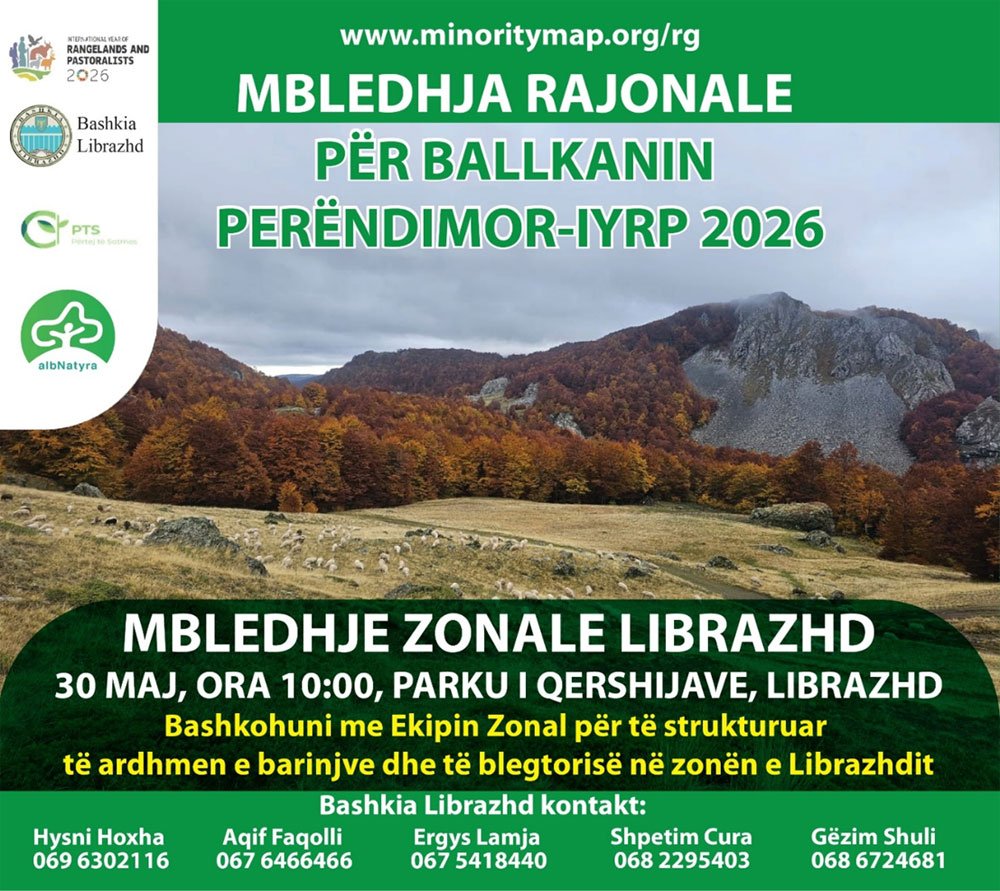
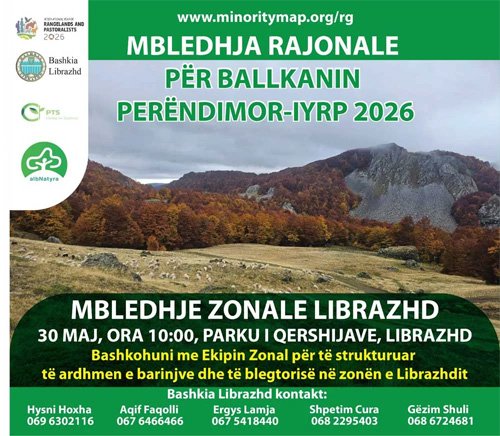
Takimi Rajonal i Ballkanit Perëndimor – Zona e Elbasanit [Shqipëri], që do të mbahet në Librazhd më 30 maj 2026, është pjesë e iniciativës më të gjerë të Takimit Rajonal të Barinjve të Ballkanit Perëndimor (WBRG) që po organizohet për të përafruar Vitin Ndërkombëtar të Kullotave dhe Barinjve (IYRP) https://www.fao.org/rangelands-pastoralists-2026 dhe www.iyrp.info. Këto takime janë hartuar si platforma të lokalizuara që bashkojnë barinj, komunitete etnike, udhëheqës barinjsh, aktorë të shoqërisë civile, shërbime veterinare, bashki, sshkolla profesionale, akademikë dhe palë të tjera të interesuara për të shkëmbyer njohuri, për të ndarë përvoja të jetuara dhe për të forcuar avokimin e drejtuar nga komuniteti mbi të drejtat e barinjve. Takimi Zonal i Elbasanit do të përqendrohet në sfidat dhe mundësitë specifike të rajonit, veçanërisht ato që ndikojnë në aksesin në kullota, lëvizshmërinë e bagëtive, jetesën e barinjve, qëndrueshmërinë ekologjike dhe përfshirjen sociale brenda rajonit qendror të Shqipërisë.
I vendosur në bashkinë malore dhe me kulturë të pasur të Librazhdit — e njohur për afërsinë e saj me peizazhet natyrore dhe komunitetet e larmishme rurale — takimi do të nxisë dialogun mbi zhvillimin me pjesëmarrja dhe ndërtimin e qëndrueshmërisë. Përmes diskutimeve ndervepruese, rrëfimit të historive dhe planifikimit bashkëpunues, pjesëmarrësit do të kontribuojnë në formësimin e strategjive kolektive në përputhje me qëllimet më të gjera të procesit të Takimit Rajonal. Pjesëmarrësit do të nënshkruajnë dhe miratojnë Deklaratën e Pastoralistëve të Ballkanit Perëndimor për të nxjerrë në pah zërat e tyre për të drejtat dhe shqetësimet e tyre. Eventi synon gjithashtu të përforcojë zërat e barinjve dhe të ushqejë njohuritë lokale në biseda më të gjera rajonale dhe globale mbi pastoralizmin, të drejtat e pakicave dhe zhvillimin e qëndrueshëm. TË GJITHË JANË TË FTUAR TË MARRIN PJESË. Për më shumë informacion, ju lutemi kontaktoni Dr. Kristaq Skenderi, Tel: +355 2061739, Email: kristaqs.veterinary@yahoo.com Lexoni më shumë këtu: https://minoritymap.org/rg/librazhd
Takimi Rajonal i Barinjve të Ballkanit Perëndimor (WBRG) – Takimi Zonal i Elbasanit, që do të mbahet në Librazhd, Shqipëri më 30 maj 2026, përbën një pjesë integrale të iniciativës më të gjerë të Takimeve Rajonale të lehtësuar nga Instituti Grassroots i Ballkanit Perëndimor në partneritet me institucione të ndryshme. Këto takime janë hartuar si platforma pjesëmarrëse që bashkojnë barinj, , shërbime veterinare, aktorë të shoqërisë civile, studiues dhe politikëbërës për të diskutuar së bashku mbi të ardhmen e sistemeve baritore. I ankoruar në frymën e Vitit Ndërkombëtar të Kullotave dhe Barinjve 2026, takimi i Librazhdit përfaqëson një moment kritik për artikulimin e perspektivave bazë nga zona e Elbasanit brenda dialogjeve më të gjera të Ballkanit Perëndimor.
Pastoralizmi në Ballkanin Perëndimor — që përfshin Shqipërinë, Malin e Zi, Kosovën, Maqedoninë e Veriut, Bosnjën dhe Hercegovinën dhe Serbinë — përbën një nga sistemet më të vjetra socio-ekologjike të Evropës. Komunitetet baritore janë kujdestarë të biodiversitetit, kujdestarë të kullotave të brishta dhe bartës të traditave të pasura kulturore të rrënjosura në transhumancë dhe lëvizshmëri sezonale. Megjithatë, pavarësisht kontributeve të tyre në sistemet e qëndrueshme ushqimore, ekuilibrin ekologjik dhe trashëgiminë kulturore, blegtorët mbeten të margjinalizuar në diskursin e politikave, tregjeve dhe zhvillimit. Takimi i Librazhdit është, pra, si një platformë për dialog ashtu edhe një hapësirë për avokim drejt njohjes, të drejtave dhe qëndrueshmërisë.
I vendosur në një peizazh malor me tradita të forta blegtorale, Librazhdi ofron një mjedis të përshtatshëm për të pritur një takim zonal të fokusuar në komunitetet e barinjve. Zona e Elbasanit pasqyron shumë nga sfidat më të gjera rajonale – rënien e jetesës blegtorale, zvogëlimin e kullotave dhe tranzicionet socio-ekonomike që prekin popullatat rurale. Takimi synon të lehtësojë diskutimet e udhëhequra nga komuniteti mbi këto çështje, duke forcuar rrjetet midis blegtorëve dhe palëve të interesuara. Eventi do të ndërtohet mbi objektivat e përcaktuara në kornizën e Takimeve Rajonale të Ballkanit Perëndimor (WBRG), duke përfshirë shkëmbimin e njohurive, planifikimin pjesëmarrës dhe amplifikimin e zërave të bazës. Është e rëndësishme të theksohet se ai do të shërbejë si një urë midis realiteteve lokale dhe proceseve të politikave kombëtare/rajonale/globale, duke siguruar që përvojat e jetuara të barinjve të informojnë strategji më të gjera mbi blegtorinë, qëndrueshmërinë ndaj klimës dhe të drejtat e barinjve. Duke integruar njohuritë nga WBRG, Takimi i Librazhdit synon të transformojë sfidat e identifikuara në rrugë të zbatueshme.
Një fokus qendror i Takimit Zonal të Elbasanit-1 në Librazhd është nxjerrja në pah e sfidave shumëdimensionale me të cilat përballen barinjtë dhe komunitetet blegtorale. Këto sfida janë thellësisht të ndërlidhura, duke reflektuar pabarazitë strukturore, presionet mjedisore dhe neglizhencën e politikave.
1. Pasiguria e Pronësisë së Tokës dhe Qasja e Kufizuar në Kullota
Një nga çështjet më urgjente është mungesa e pronësisë së sigurt të tokës. Sistemet baritore varen nga të përbashkëtat – kullotat e përbashkëta, kullotat sezonale dhe korridoret e migrimit – megjithatë kornizat ligjore shpesh nuk arrijnë të njohin të drejtat zakonore. Kjo ka rezultuar në fragmentimin e tokës, privatizimin dhe rritjen e konflikteve mbi aksesin në burime. Në Shqipëri, titujt e paqartë të tokës dhe pretendimet e mbivendosura e përkeqësojnë më tej situatën, duke i lënë barinjtë të prekshëm nga përjashtimi.
2. Rënia e Transhumancës dhe Kufizimet e Lëvizshmërisë
Transhumanca,lëvizja sezonale e bagëtive, është thelbësore për pastoralizmin e qëndrueshëm. Megjithatë, ai është gjithnjë e më shumë nën kërcënim për shkak të kontrolleve kufitare, zgjerimit të infrastrukturës dhe ndryshimeve të përdorimit të tokës. Rrugët tradicionale të migrimit janë ndërprerë, duke kufizuar aftësinë e pastoralistëve për t’u përshtatur me ndryshueshmërinë klimatike. Ndërsa lëvizshmëria bie, zvogëlohet edhe rezistenca e sistemeve pastorale që kanë evoluar gjatë shekujve për të menaxhuar pasigurinë ekologjike.
3. Ndryshimi i Klimës dhe Stresi Mjedisor
Blegtorët janë në vijën e parë të ndikimeve të ndryshimeve klimatike. Thatësirat në rritje, reshjet e parregullta të dëborës, tkurrja e kullotave alpine dhe rritja e rreziqeve nga zjarret po zvogëlojnë produktivitetin e kullotave dhe po kërcënojnë mbijetesën e bagëtive. Pavarësisht njohurive të tyre të thella ekologjike dhe praktikave adaptive, blegtorët rrallë përfshihen në kornizat e politikave klimatike, duke çuar në mundësi të humbura për zgjidhje të bazuara në natyrë.
4. Politikat e Konservimit të Gabuara dhe Paradoksi i Biodiversitetit
Ndërsa pastoralizmi historikisht ka kontribuar në ruajtjen e peizazheve të pasura me biodiversitet, politikat e konservimit shpesh përjashtojnë kullotjen në zonat e mbrojtura. Kjo krijon një paradoks ku blegtorët – kujdestarët tradicionalë të ekosistemeve – trajtohen si kërcënime dhe jo si partnerë. Politika të tilla jo vetëm që dëmtojnë jetesën, por gjithashtu mund të çojnë në pasoja të padëshiruara ekologjike, të tilla si përhapja e shkurreve dhe rritja e rreziqeve nga zjarret.
5. Margjinalizimi Ekonomik dhe Zinxhirët e Dobëta të Vlerës
Barinjtë përballen me sfida të rëndësishme ekonomike, duke përfshirë aksesin e dobët në treg, përfitueshmëri të ulët të produkteve blegtorale dhe mungesën e infrastrukturës. Produktet tradicionale si djathi, leshi dhe mishi shpesh nënvlerësohen pavarësisht cilësisë së tyre të lartë. Integrimi i dobët në zinxhirët e vlerës, mungesa e sistemeve të certifikimit dhe paqëndrueshmëria e çmimeve dekurajojnë më tej investimet në mjetet e jetesës pastorale. Këto kushte kontribuojnë në një cikël varfërie dhe margjinalizimi.
6. Erozioni Kulturor dhe Humbja e Njohurive Tradicionale
Pastoralizmi mishëron sisteme njohurish shekullore, duke përfshirë ciklet e kullotjes, mbarështimin e kafshëve dhe parashikimin e motit. Megjithatë, globalizimi, migrimi urban dhe modernizimi po i gërryejnë këto tradita. Humbja e praktikave të transhumancës dhe njohurive indigjene kërcënon jo vetëm identitetin kulturor, por edhe praktikat e qëndrueshme të menaxhimit të tokës që kanë mbështetur prej kohësh biodiversitetin.
7. Rënia Demografike dhe Mungesa e Punës
Shpopullimi rural dhe migrimi i të rinjve po çojnë në plakjen e popullatave pastorale. Brezat e rinj e perceptojnë pastoralizmin si ekonomikisht të paqëndrueshëm dhe shoqërisht të nënvlerësuar. Si rezultat, mungesat e fuqisë punëtore po bëhen akute dhe transferimi i njohurive midis brezave po dobësohet, duke rrezikuar vazhdimësinë e sistemeve pastorale.
8. Padukshmëria e Politikave dhe Fragmentimi Institucional
Blegtorët mbeten kryesisht të padukshëm në kornizat e politikave. Përgjegjësitë për pastoralizmin janë të fragmentuara nëpër institucione të shumta, duke çuar në politika jo koherente që nuk arrijnë të adresojnë nevojat specifike të sistemeve të lëvizshme të blegtorisë. Kjo mungesë njohjeje rezulton në shërbime mbështetëse të pamjaftueshme, rregullore të papërshtatshme dhe përjashtim nga proceset e vendimmarrjes.
9. Mungesa e Infrastrukturës dhe Shërbimeve Thelbësore
Infrastruktura bazë, siç janë sistemet e ujit, strehimet, rrugët dhe lidhja dixhitale, shpesh mungon në zonat pastorale. Përveç kësaj, shërbimet veterinare dhe ato të ekstensionit janë të pamjaftueshme dhe të përshtatura dobët me sistemet e lëvizshme. Këto boshllëqe kufizojnë ndjeshëm produktivitetin, shëndetin e kafshëve dhe sigurinë e përgjithshme të jetesës.
10. Shkelja nga Projektet e Zhvillimit dhe Nxjerjes në Shkallë të Gjerë
Ndërhyrjet e zhvillimit në shkallë të gjerë – të tilla si digat e hidrocentraleve, operacionet minerare, infrastruktura turistike, parqet e energjisë së erës dhe industri të tjera nxjerrëse – po i mbyllin gjithnjë e më shumë kullotat tradicionale të përbashkëta në të gjithë botën, përfshirë Ballkanin Perëndimor. Këto projekte shpesh vazhdojnë pa konsultime kuptimplote me blegtorët, duke çuar në shpronësim dhe fragmentim të kullotave. Ndërsa rrugët e kullotjes bllokohen dhe ekosistemet degradohen, lëvizshmëria e bagëtive kufizohet rëndë. Në këtë proces, të drejtat e tokës dhe burimeve të blegtorëve bëhen viktimat e para, duke dëmtuar si jetesën ashtu edhe sistemet shekullore të transportit.
Mbledhja Zonale e Elbasanit në Librazhd pritet të gjenerojë një axhendë të fortë, të drejtuar nga komuniteti, që pasqyron prioritetet dhe aspiratat e blegtorëve. Rezultatet kryesore ka të ngjarë të përfshijnë rekomandime për sigurimin e të drejtave të tokës dhe kullotjes, rivendosjen e lëvizshmërisë përmes bashkëpunimit ndërkufitar, integrimin e blegtorisë në politikat e klimës dhe biodiversitetit, dhe forcimin e ekonomive blegtorale përmes zinxhirëve të përmirësuar të vlerës. Po aq e rëndësishme është theksi në rigjallërimin kulturor dhe angazhimin e të rinjve. Njohja e transhumanizmit si trashëgimi kulturore jomateriale dhe promovimi i blegtorisë si një profesion i qëndrueshëm dhe dinjitoz janë hapa kritikë drejt mbështetjes së këtyre sistemeve. Mbledhja gjithashtu do të përforcojë nevojën për qeverisje gjithëpërfshirëse, duke siguruar që blegtorët të jenë të përfshirë në mënyrë aktive në formësimin e politikave që ndikojnë në jetën e tyre.
Mbledhja Rajonale e Ballkanit Perëndimor – Mbledhja Zonale e Elbasanit-1 në Librazhd përfaqëson një hap jetësor në ripërqendrimin e blegtorëve brenda narrativave të zhvillimit rajonal. Në një kohë kur sistemet blegtorale përballen me sfida të pashembullta, kjo Mbledhje ofron një platformë për të artikuluar shqetësimet kolektive, për të ndarë njohuritë dhe për të avokuar për ndryshime transformuese. Pastoralizmi ndodhet në një udhëkryq — i kërcënuar nga margjinalizimi, por që mbart potencial të madh për t’u përballur me sfidat globale si ndryshimi i klimës, humbja e biodiversitetit dhe prodhimi i qëndrueshëm i ushqimit. Takimi i Librazhdit, pra, shërben jo vetëm si një dialog rajonal, por edhe si një Thirrje për Veprim për të njohur, respektuar dhe rigjallëruar sistemet pastorale si shtylla thelbësore të të ardhmes elastike dhe të qëndrueshme në Ballkanin Perëndimor.
Partneri dhe Udhëheqësi i Ekipit të Terrenit: Dr. Kristaq Skenderi, +355 2061739
Koordinatori Zonal: Jetmir Kola, +355 698587501
Koordinatorët e Bashkisë: Kujtim Kujtila, +355676466466 | Aqif Faqolli, +355 692435607
OJQ-të: Pertej te Sotmes (Shpetim Cura), +355682295403 | AlbNatyra (Z. Gëzim Shuli), +355686724681
TV & Radio: RTSH (Arben Kruta), +355 682023731
Akademik: Armando Gjyshka (Universiteti Bujqësor i Tiranës), +355 688812981
Qeveria: Bashkia Librzhd (Mariglen Disha) | Xhek Nezha (Pushtar), +355696666264
Shepherd Drejtues: Adnand Blloshmi, +355682558373 | Hajdar Balla, +355693246677 | Skender Hasa, +355692548285
Lehtësues të Përgjithshëm:
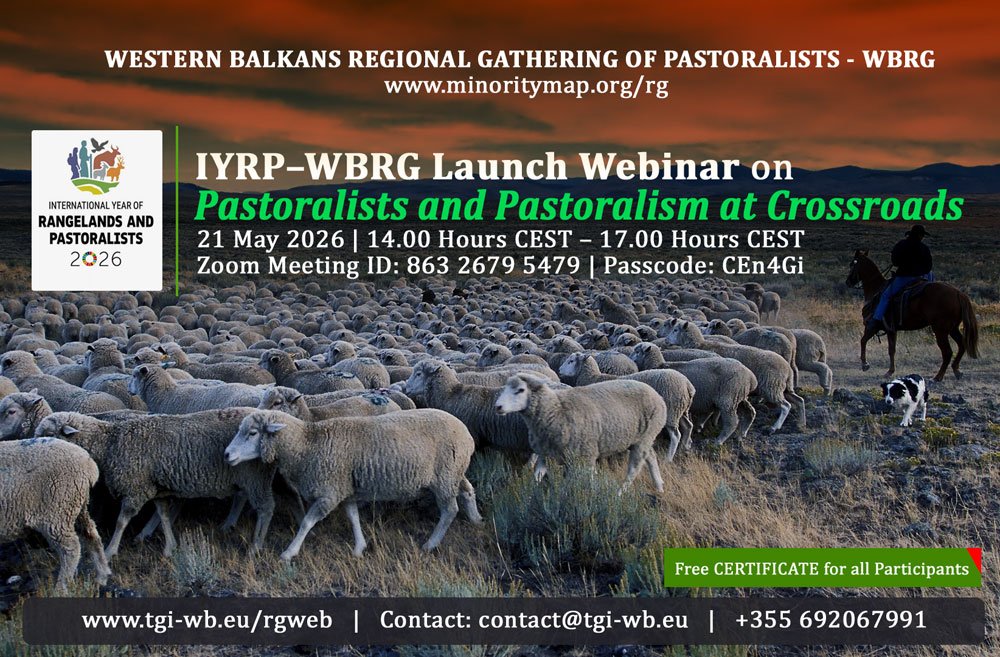
The Western Balkans Regional Gathering – Elbasan Zone [Albania], to be held in Librazhd on 30 May 2026, is part of the broader initiative of the Western Balkans Regional Gathering of Pastoralists (WBRG) being organized to align the International Year of Rangelands and Pastoralists (IYRP) https://www.fao.org/rangelands-pastoralists-2026 and www.iyrp.info. These gatherings are designed as localized platforms that bring together shepherds, ethnic communities, shepherd leaders, civil society actors, veterinary services, municipalities, vocational colleges, academics, and other stakeholders to exchange knowledge, share lived experiences, and strengthen community-driven advocacy on the rights of pastoralists. The Elbasan Zonal Gathering will focus on region-specific challenges and opportunities, particularly those affecting access to grazing lands, livestock mobility, herders’ livelihoods, ecological sustainability, and social inclusion within Albania’s central region.
Set in the mountainous and culturally rich municipality of Librazhd — known for its proximity to natural landscapes and diverse rural communities — the gathering will foster dialogue on participatory development and resilience-building. Through interactive discussions, storytelling, and collaborative planning, participants will contribute to shaping collective strategies aligned with the broader goals of the Regional Gathering process. The participants will sign and pass the Western Balkans Declaration of Pastoralists to highlight their voices for their rights and concerns. The event also aims to amplify shepherd people’s voices and feed local insights into wider regional and global conversations on pastoralism, minority rights, and sustainable development. ALL ARE INVITED TO PARTICIPATE. For further information, please contact Dr. Kristaq Skenderi, Tel: +355 2061739, Email: kristaqs.veterinary@yahoo.com Read more here: https://minoritymap.org/rg/librazhd
The Western Balkans Regional Gathering of Pastoralists (WBRG) – Elbasan Zonal Gathering-1, to be held in Librazhd, Albania on 30 May 2026, forms an integral part of the broader Regional Gatherings initiative facilitated by The Grassroots Institute Western Balkans in partnership of various institutions. These gatherings are designed as participatory platforms that bring together pastoralists, shepherds, veterinary services, civil society actors, researchers, and policymakers to collectively deliberate on the future of pastoral systems. Anchored in the spirit of the International Year of Rangelands and Pastoralists 2026, the Librazhd meeting represents a critical moment for articulating grassroots perspectives from the Elbasan zone within wider Western Balkans dialogues.
Pastoralism in the Western Balkans — spanning Albania, Montenegro, Kosovo, North Macedonia, Bosnia and Herzegovina, and Serbia — constitutes one of Europe’s oldest socio-ecological systems. Pastoral communities are custodians of biodiversity, stewards of fragile rangelands, and bearers of rich cultural traditions rooted in transhumance and seasonal mobility. However, despite their contributions to sustainable food systems, ecological balance, and cultural heritage, pastoralists remain marginalized in policy, markets, and development discourse. The Librazhd Gathering is, thus, both a platform for dialogue and a space for advocacy toward recognition, rights, and resilience.
Situated in a mountainous landscape with strong pastoral traditions, Librazhd offers an appropriate setting to host a zonal gathering focused on shepherd communities. The Elbasan Zone reflects many of the broader regional challenges — declining pastoral livelihoods, shrinking grazing lands, and socio-economic transitions affecting rural populations. The Gathering aims to facilitate community-led discussions on these issues while strengthening networks among pastoralists and stakeholders. The event will build upon the objectives outlined in the Western Balkans Regional Gatherings (WBRG) framework, including knowledge exchange, participatory planning, and amplifying grassroots voices. Importantly, it will serve as a bridge between local realities and national/regional/global policy processes, ensuring that the lived experiences of shepherds inform broader strategies on pastoralism, climate resilience, and rights of shepherds. By integrating insights from the WBRG, the Librazhd Gathering seeks to transform identified challenges into actionable pathways.
A central focus of the Elbasan Zonal Gathering-1 at Librazhd is to highlight the multidimensional challenges confronting shepherds and pastoral communities. These challenges are deeply interconnected, reflecting structural inequalities, environmental pressures, and policy neglect.
1. Land Tenure Insecurity and Restricted Access to Pastures
One of the most pressing issues is the lack of secure land tenure. Pastoral systems depend on commons — shared grazing lands, seasonal pastures, and migration corridors — yet legal frameworks often fail to recognize customary rights. This has resulted in land fragmentation, privatization, and increasing conflicts over access to resources. In Albania, unclear land titles and overlapping claims further exacerbate the situation, leaving shepherds vulnerable to exclusion.
2. Decline of Transhumance and Mobility Restrictions
Transhumance, the seasonal movement of livestock, is central to sustainable pastoralism. However, it is increasingly under threat due to border controls, infrastructure expansion, and land-use changes. Traditional migration routes are disrupted, limiting pastoralists’ ability to adapt to climatic variability. As mobility declines, so does the resilience of pastoral systems that have evolved over centuries to manage ecological uncertainty.
3. Climate Change and Environmental Stress
Pastoralists are on the frontline of climate change impacts. Increasing droughts, irregular snowfall, shrinking alpine pastures, and rising wildfire risks are reducing pasture productivity and threatening livestock survival. Despite their deep ecological knowledge and adaptive practices, pastoralists are rarely included in climate policy frameworks, leading to missed opportunities for nature-based solutions.
4. Misguided Conservation Policies and Biodiversity Paradox
While pastoralism has historically contributed to maintaining biodiversity-rich landscapes, conservation policies often exclude grazing from protected areas. This creates a paradox where pastoralists — traditional stewards of ecosystems — are treated as threats rather than partners. Such policies not only undermine livelihoods but may also lead to unintended ecological consequences, such as shrub encroachment and increased wildfire risks.
5. Economic Marginalization and Weak Value Chains
Shepherds face significant economic challenges, including poor market access, low profitability of livestock products, and lack of infrastructure. Traditional products such as cheese, wool, and meat are often undervalued despite their high quality. Weak integration into value chains, absence of certification systems, and price volatility further discourage investment in pastoral livelihoods. These conditions contribute to a cycle of poverty and marginalization.
6. Cultural Erosion and Loss of Traditional Knowledge
Pastoralism embodies centuries-old knowledge systems, including grazing cycles, animal breeding, and weather prediction. However, globalization, urban migration, and modernization are eroding these traditions. The loss of transhumance practices and indigenous knowledge threatens not only cultural identity but also sustainable land management practices that have long supported biodiversity.
7. Demographic Decline and Labour Shortages
Rural depopulation and youth migration are leading to aging pastoral populations. Younger generations perceive pastoralism as economically unviable and socially undervalued. As a result, labour shortages are becoming acute, and knowledge transfer between generations is weakening, jeopardizing the continuity of pastoral systems.
8. Policy Invisibility and Institutional Fragmentation
Pastoralists remain largely invisible in policy frameworks. Responsibilities for pastoralism are fragmented across multiple institutions, leading to incoherent policies that fail to address the specific needs of mobile livestock systems. This lack of recognition results in inadequate support services, inappropriate regulations, and exclusion from decision-making processes.
9. Lack of Infrastructure and Essential Services
Basic infrastructure such as water systems, shelters, roads, and digital connectivity is often lacking in pastoral areas. In addition, veterinary and extension services are insufficient and poorly adapted to mobile systems. These gaps significantly constrain productivity, animal health, and overall livelihood security.
10. Encroachment by Large-Scale Development and Extractive Projects
Large-scale development interventions — such as hydropower dams, mining operations, tourism infrastructure, wind energy parks, and other extractive industries — are increasingly enclosing traditional grazing commons across the world, including the Western Balkans. These projects often proceed without meaningful consultation with pastoralists, leading to dispossession and fragmentation of rangelands. As grazing routes are blocked and ecosystems degraded, livestock mobility is severely constrained. In this process, the land and resource rights of pastoralists become the first casualties, undermining both livelihoods and centuries-old transhumance systems.
The Elbasan Zonal Gathering at Librazhd is expected to generate a strong, community-driven agenda that reflects the priorities and aspirations of pastoralists. Key outcomes will likely include recommendations for securing land and grazing rights, restoring mobility through transboundary cooperation, integrating pastoralism into climate and biodiversity policies, and strengthening pastoral economies through improved value chains. Equally important is the emphasis on cultural revitalization and youth engagement. Recognizing transhumance as intangible cultural heritage and promoting pastoralism as a viable and dignified profession are critical steps toward sustaining these systems. The Gathering will also reinforce the need for inclusive governance, ensuring that pastoralists are actively involved in shaping policies that affect their lives.
The Western Balkans Regional Gathering – Elbasan Zonal Gathering-1 at Librazhd represents a vital step in re-centring pastoralists within regional development narratives. At a time when pastoral systems face unprecedented challenges, this Gathering offers a platform to articulate collective concerns, share knowledge, and advocate for transformative change. The pastoralism stands at a crossroads — threatened by marginalization yet holding immense potential to address global challenges such as climate change, biodiversity loss, and sustainable food production. The Librazhd Gathering, thus, serves not only as a regional dialogue but as a Call to Action to recognize, respect, and revitalize pastoral systems as essential pillars of resilient and sustainable futures in the Western Balkans.
Partner & Field Team Leader: Dr. Kristaq Skenderi, +355 2061739
Zonal Coordinator: Jetmir Kola, +355 698587501
Municipality Coordinators: Kujtim Kujtila, +355676466466 | Aqif Faqolli, +355 692435607
NGOs: Pertej te Sotmes (Shpetim Cura), +355682295403 | AlbNatyra (Mr. Gëzim Shuli), +355686724681
TV & Radio: RTSH (Arben Kruta), +355 682023731
Academic: Armando Gjyshka (Agricultural University of Tirana), +355 688812981
Government: Municipality of Librzhd (Mariglen Disha) | Xhek Nezha (Forest Officer), +355696666264
Shepherd Leaders: Adnand Blloshmi, +355682558373 | Hajdar Balla, +355693246677 | Skender Hasa, +355692548285
Overall Facilitators: